

Centrifugal vs Electrostatic Oil Mist Collectors: A 5-Year Cost Comparison — Why Filtermist
There is rarely a single right answer to machining-centre oil mist control. Three mainstream routes exist — cartridge filtration, electrostatic precipitation (ESP) and centrifugal separation. This article focuses on the two "long-term" routes, centrifugal and electrostatic, lays out the real spending over a five-year cycle, and explains why Filtermist deserves priority consideration.
1. How the two technologies differ
The representative of the centrifugal route is Filtermist. Its principle is centrifugal impaction: oil-mist-laden air is drawn into a high-speed rotating perforated drum, mist droplets impinge on the drum blades and coalesce into larger droplets, centrifugal force throws the oil onto the casing wall, the oil drains back to the machine coolant tank for reuse, and clean air returns to the workshop from the top of the unit.
Electrostatic precipitation (ESP) takes another path: oil mist particles are charged in a high-voltage field and then captured by collector plates. It captures 0.1–0.3 μm fine mist well and is often used on Swiss-type lathes and fine machining centres.
The fundamental difference: centrifugal separation is physical — no consumables, but it needs sufficient airflow and drum speed; ESP is electrostatic adsorption — finer capture, but electrodes need periodic cleaning and high-voltage components demand careful safety design in combustible mist environments.
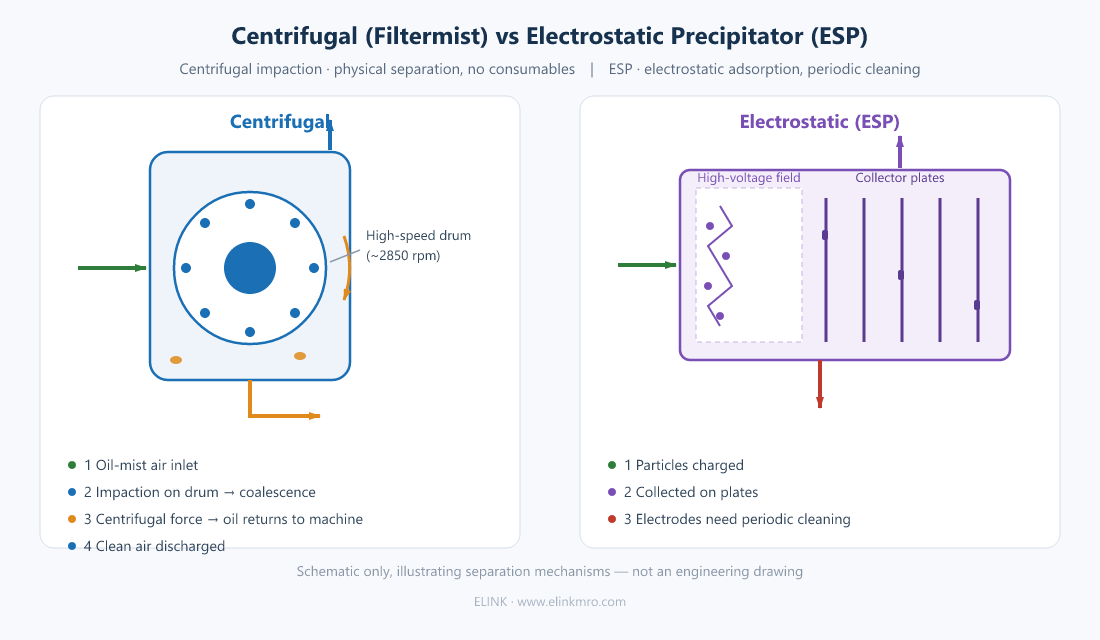
Fig.1 | Centrifugal vs ESP working principles (schematic)
2. The five-year economics, itemised
Many decisions stall on the purchase price, but the price tag is only part of the spending. Five-year TCO at least includes:
- Equipment purchase price;
- Consumables (cartridges, ESP cleaning and wear parts);
- Electricity (fan and, for ESP, high-voltage power);
- Maintenance labour;
- Downtime losses (retrofit or servicing time);
- Coolant/oil recovery credits.
Consumables and maintenance. Centrifugal units have no cartridge to replace — routine care is drum cleaning plus a few wear parts. ESP electrodes and collector cells need periodic cleaning, more often as mist concentration rises; deferred cleaning means efficiency decay. Some equipment vendors' public material mentions annual maintenance costs reaching 30%–50% of purchase price for cartridge-based solutions (vendor statement, not an independent statistic).
Energy. Both need fans; ESP adds a high-voltage supply but usually has lower system pressure drop. Actual energy differences must be calculated per model and airflow — avoid sweeping claims.
Oil recovery. Centrifugal units return separated cutting oil/coolant directly to the machine — a continuous credit for mid-size shops consuming barrels of emulsion monthly.
Downtime and reliability. Centrifugal units are mechanically simple — a drum and a motor; ESP electrode cleaning usually requires stopping the machine.
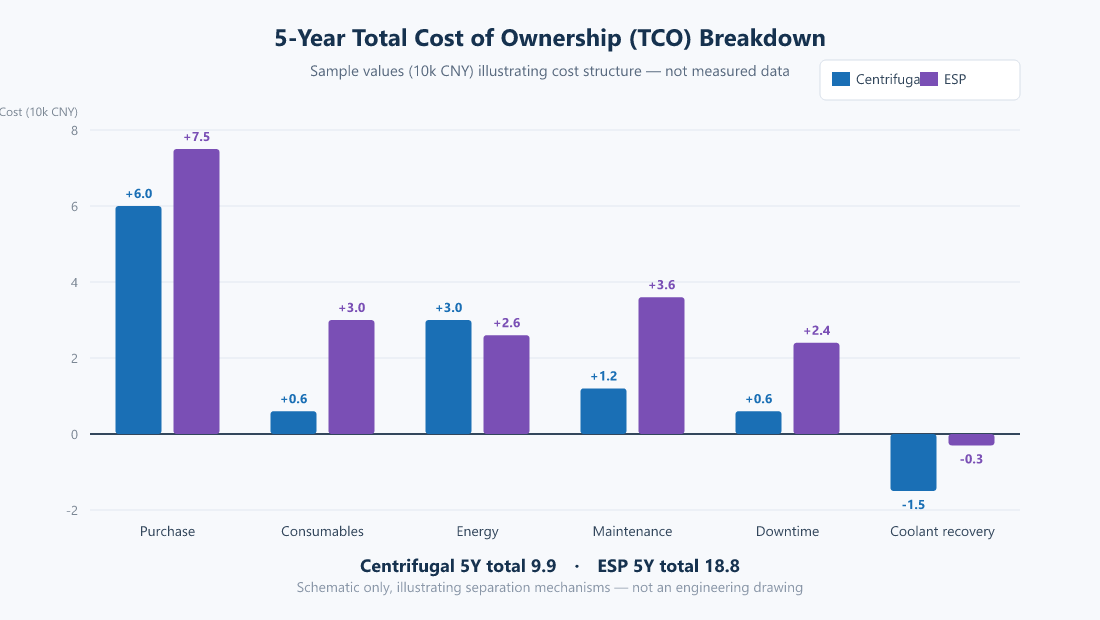
Fig.2 | 5-year TCO breakdown (sample values)
Direction of the conclusion: centrifugal separation usually holds a clearer long-term cost advantage in consumables, maintenance frequency and oil recovery — especially for machining shops with medium-to-high mist loads, continuous or three-shift production. ESP keeps its value where sub-micron emission limits are strict (Swiss-type lathes, precision grinding), but the cleaning labour and downtime must be priced in.
3. Fit comes first — neither wins everywhere
Objectively, this is not "which is better" but "which fits":
- Shops dominated by machining centres, CNC lathes and grinders with medium mist loads that value low maintenance and continuous running → centrifugal is the safer bet;
- Processes dominated by Swiss-type lathes and fine machining with strict sub-micron emission limits → ESP, or a combined "centrifugal + after-filter" solution, is worth evaluating;
- If a centralised exhaust system already exists, match the total airflow (a 1.1–1.2× margin over actual exhaust volume is generally advised) rather than piecing units together.
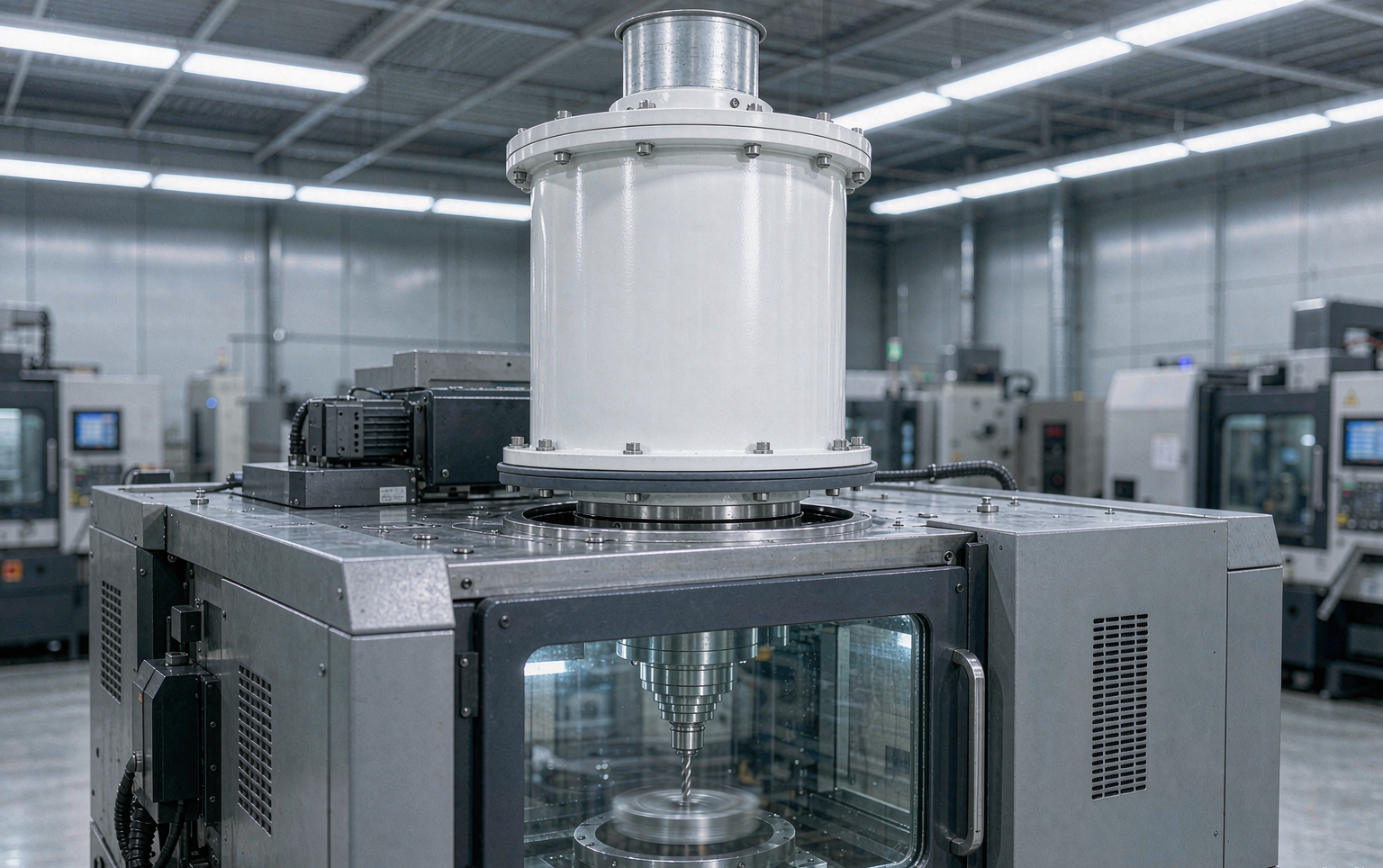
Fig.3 | Direct roof-mounting on the machine tool: no floor space, source capture (illustrative)
4. Why Filtermist
Proven technology. Filtermist Limited was founded in 1969 in Telford, UK, and is now part of Sweden's Absolent Air Care Group — over 50 years focused on source capture of oil mist, coolant mist, smoke and vapour. Per brand literature: drum speed approx. 2850 rpm @50 Hz; the FX series FX4002 delivers approx. 1250 m³/h @50 Hz; AX series achieves approx. 95% efficiency at 1 μm (laboratory conditions).
Low maintenance, no cartridges. No paper cartridges to replace — maintenance is mainly drum cleaning, sharply reducing consumable and downtime pressure. The F Monitor's red/amber/green indication makes servicing predictable rather than experience-dependent.
Oil flows back. Separated oil returns to the machine, cutting coolant consumption and hazardous-waste volumes.
Mounting that fits machining centres. Compatible with fully enclosed and semi-enclosed machine tools; the unit mounts directly on the roof of the machine — no floor space, capture at source. FX and S series also offer stainless-steel versions for corrosive or food-grade environments.
Service and support. Filtermist has technical support and parts networks in over 60 countries; new units carry a 5-year warranty per brand information (subject to official terms).
| Cost item (sample, 10k CNY) | Centrifugal | ESP |
|---|---|---|
| Purchase | 6.0 | 7.5 |
| 5-year consumables | 0.6 | 3.0 |
| 5-year energy | 3.0 | 2.6 |
| 5-year maintenance | 1.2 | 3.6 |
| 5-year downtime | 0.6 | 2.4 |
| Coolant recovery credit | -1.5 | -0.3 |
| 5-year total | 9.9 | 18.8 |
Table 1 | 5-year cost worksheet (sample values — replace with your own data)
5. Do this before comparing models
- Measure: commission an accredited lab to test oil mist concentration at breathing height (~1.5 m) using GBZ methods. Public lab quotes suggest roughly CNY 800–2,000 per routine test, 5–7 working days for the report (reference only).
- Size the airflow: keep margin over actual exhaust volume — avoid undersizing or over-specifying.
- Define boundaries: coolant type (neat oil / emulsion), machine count, centralised treatment or not.
Get the data right and the choice usually makes itself. Oil mist control is not a one-off purchase — it is a bill spread over five years. Do the maths, and the decision often becomes obvious.
Data note: cost figures above are sample values illustrating cost structure, not measured commitments. Filtermist technical parameters are quoted from public brand literature.|ELINK (Shanghai) Trading Co., Ltd. is an authorized distributor of Filtermist. For unit selection, oil-mist testing advice, quotation and technical support, please contact us.